Optimized Roast

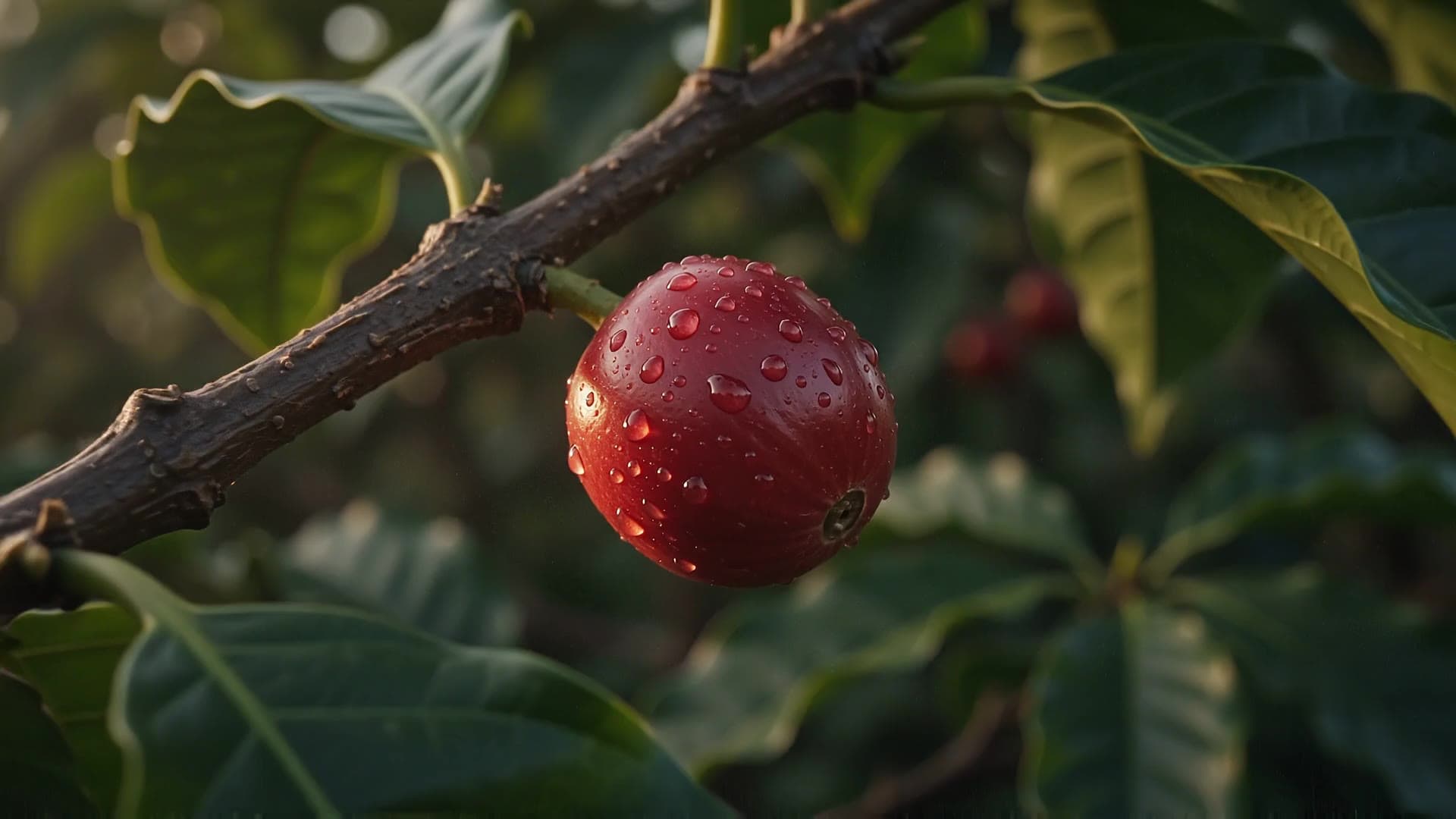
Coffee begins as fruit.

Fine Robusta from Vietnam and Yirgacheffe G1 from Ethiopia.

Roasted light, on purpose.

Roasted light to keep more of the bean's caffeine and chlorogenic acids.

Specialty coffee, optimized.

Who it's for

Built for the hour before you train, and the hours before a deadline.

For people who time their coffee: before a session, before a race, before the work that has to be finished today.

Tap a clip to watch it full screen.

The coffee

Two lines, both roasted light.

Both are roasted light to keep as much of the bean's caffeine and chlorogenic acids as we can.

Pre-workout coffee

Performance+

Origin
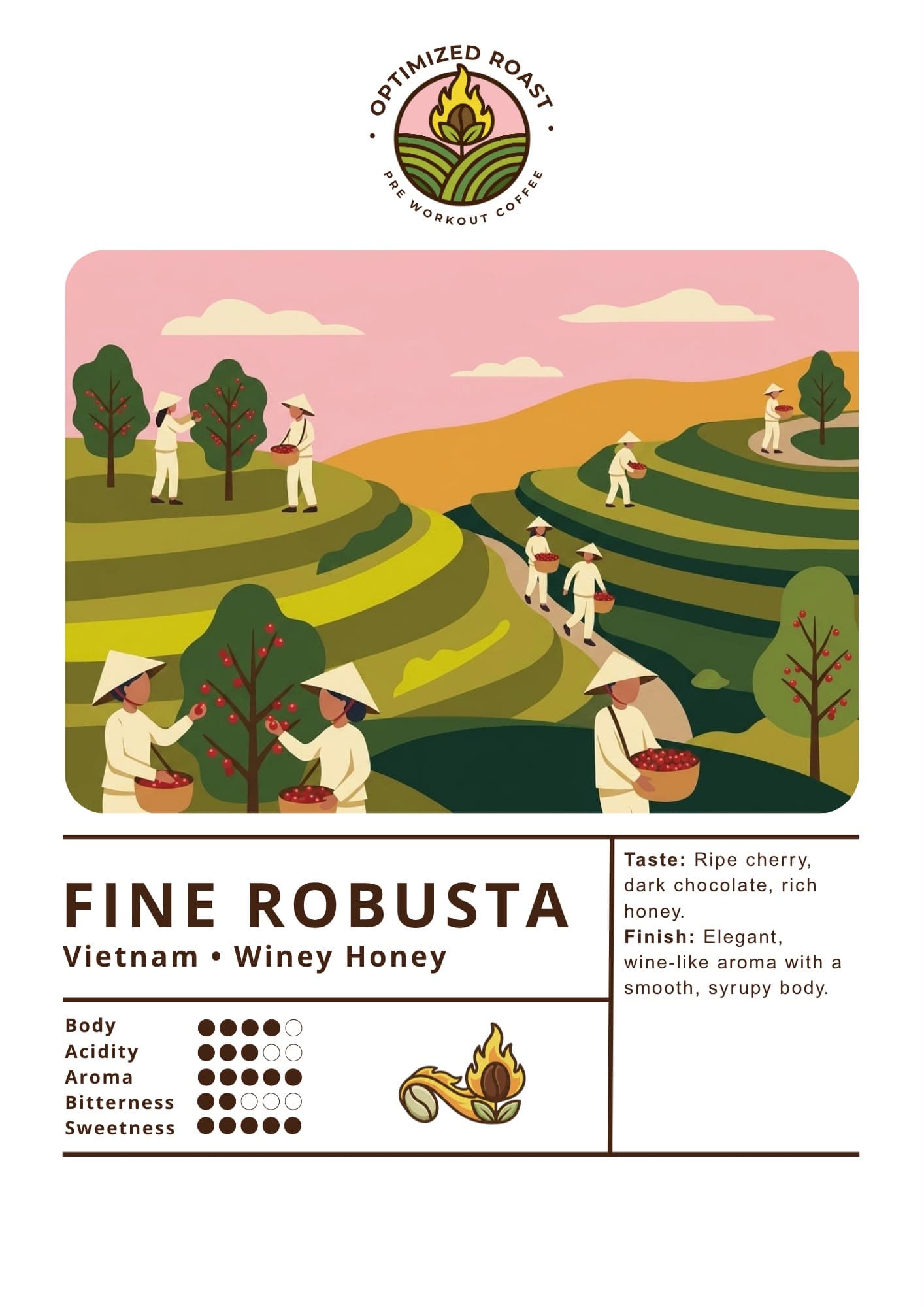
Vietnam
Variety
Fine Robusta
Process
Winey honey
Roast
Light roast

Recommended serving

8 g per cup

Performance+ is higher in caffeine than ordinary coffee, so a cup uses about half the usual beans.

Tasting notes

Ripe cherry, dark chocolate, rich honey

Finish

Elegant, wine-like aroma with a smooth, syrupy body

Flavour

Body4 of 5
Acidity3 of 5
Aroma5 of 5
Bitterness2 of 5
Sweetness5 of 5

Price: ¥2,480 / 200 gtax included

Notify me when the shop opens
Everyday coffeeComing soon

Lifestyle

Origin
Ethiopia
Variety
Yirgacheffe G1
Process
Kochere washed
Roast
Light roast

Not cupped yet. Tasting notes and price will be published at launch.

Calculator

What's in your cup.

Choose your body weight, dose and brew method to estimate the caffeine and chlorogenic acids (CGA) in one cup.

Coffee
Body weight75kg
Coffee per cup8g
Brew method

Results · Performance+

Caffeine per cup
184mg
CGA per cup
287mg
Caffeine per kg body weight
2.5mg/kg

Sports-research range: 3–6 mg/kg

This cup is below the range. At 75 kg that is 225–450 mg. Context, not a recommendation.

EFSA guidance

  • Within EFSA's 200 mg single-dose guidance for healthy adults.
  • In pregnancy, EFSA's guidance is 200 mg a day in total, from all sources.
  • Count all the caffeine in your day: coffee, tea, energy drinks, chocolate.

Performance+ figures are for our roast: 28.4 mg caffeine and 44.4 mg CGA per gram of coffee. Lifestyle uses typical Arabica values until our lot is measured, so it is an estimate. Extraction is modelled per method, with pour-over at 1:16. Grind, water temperature and time change the real figure, so treat every result as a guide.

Sources: EFSA (2015), ISSN (2021)

Why this exists

I started roasting because nothing else worked for me.

I'm a personal trainer in Tokyo. For years I relied on chemical pre-workouts and energy drinks before training, and they gave me crashes.

Cheap dark-roast robusta worked, but it tasted bad.

So I roast my own coffee, light: the coffee I wanted before training, and one I actually enjoy drinking.

— Founder, Optimized Roast

The science

What a light roast keeps.

  1. Lighter roasts keep more chlorogenic acids

    Chlorogenic acids (CGA) are the main polyphenols in coffee beans, and roasting transforms and breaks them down. A study of four coffees roasted light, medium and dark found polyphenols and CGA highest at light and medium roasts, and caffeine falling as the roast got darker.

    Hečimović et al. (2011) · Farah et al. (2005)

  2. How much caffeine is a lot

    The European Food Safety Authority (EFSA) concluded that, for healthy adults, single doses of up to 200 mg and intakes of up to 400 mg a day, from all sources, raise no safety concerns. In pregnancy, its figure is up to 200 mg a day. It also found that single doses of 100 mg may affect sleep in some adults, particularly close to bedtime.

    EFSA (2015)

  3. Why brew method matters

    Coffee oils carry two diterpenes, cafestol and kahweol. A paper filter holds back most of them: one analysis found negligible amounts in drip-filtered coffee, intermediate amounts in espresso and the most in boiled coffee. Methods also extract different amounts of caffeine and CGA.

    Gross et al. (1997) · van Dusseldorp et al. (1991)

Sources

  1. Hečimović I, et al. Comparative study of polyphenols and caffeine in different coffee varieties affected by the degree of roasting. Food Chemistry 129(3):991–1000, 2011. DOI
  2. Farah A, et al. Effect of roasting on the formation of chlorogenic acid lactones in coffee. J Agric Food Chem 53(5):1505–1513, 2005. DOI
  3. Gross G, Jaccaud E, Huggett AC. Analysis of the content of the diterpenes cafestol and kahweol in coffee brews. Food Chem Toxicol 35(6):547–554, 1997. DOI
  4. van Dusseldorp M, et al. Cholesterol-raising factor from boiled coffee does not pass a paper filter. Arteriosclerosis and Thrombosis 11(3):586–593, 1991. DOI
  5. EFSA Panel on Dietetic Products, Nutrition and Allergies. Scientific Opinion on the safety of caffeine. EFSA Journal 13(5):4102, 2015. DOI
  6. Guest NS, et al. International Society of Sports Nutrition position stand: caffeine and exercise performance. J Int Soc Sports Nutr 18:1, 2021. DOI

FAQ

Questions

Launch list

Be the first to know when the shop opens.

Leave your email address.

We'll email you when the shop opens and when Lifestyle launches. Unsubscribe any time.